3 Drastic Changes Quietly Brought by Google AI: From Document Creation to Smartphone Policies
🔊 Listen to the AI Audiobook
【Author / Supervisor Profile】
- Name: Kenji Kominato (IT Rescue Expert / Business Owner)
- Background: Engaged in enterprise system troubleshooting, rescue of failing projects, infrastructure redesign, and implementation support of AI-native architectures for over 20 years. Driving the optimization of corporate AI infrastructure and maximization of ROI, based on a hands-on approach cultivated in the field of business management and the fusion of digital technology.
Executive Summary (Introduction)
"The evolution of AI is so fast that I can no longer keep track of what's happening."
You are not the only one harboring such concerns. The recent AI trends are rewriting the very foundations of how we work and what smartphones are, moving far beyond the scope of mere news.
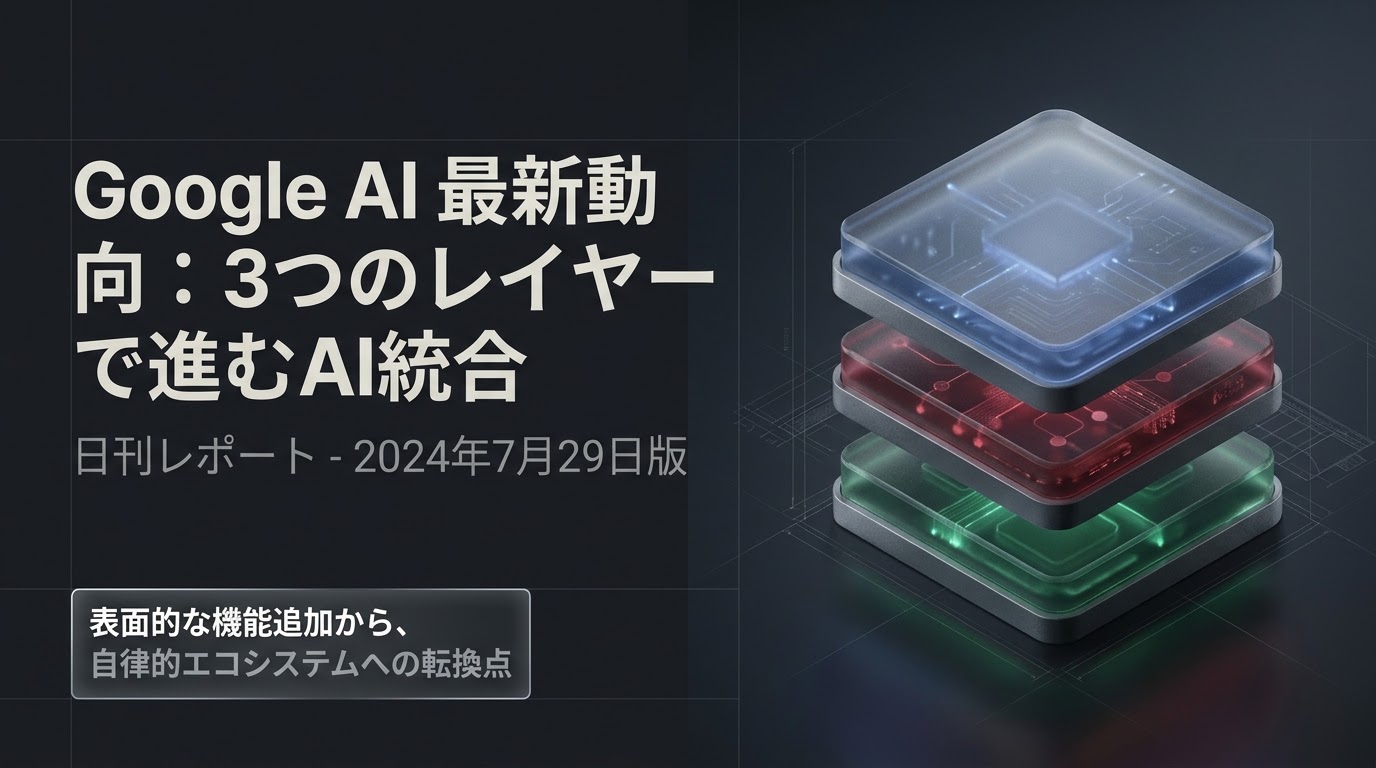
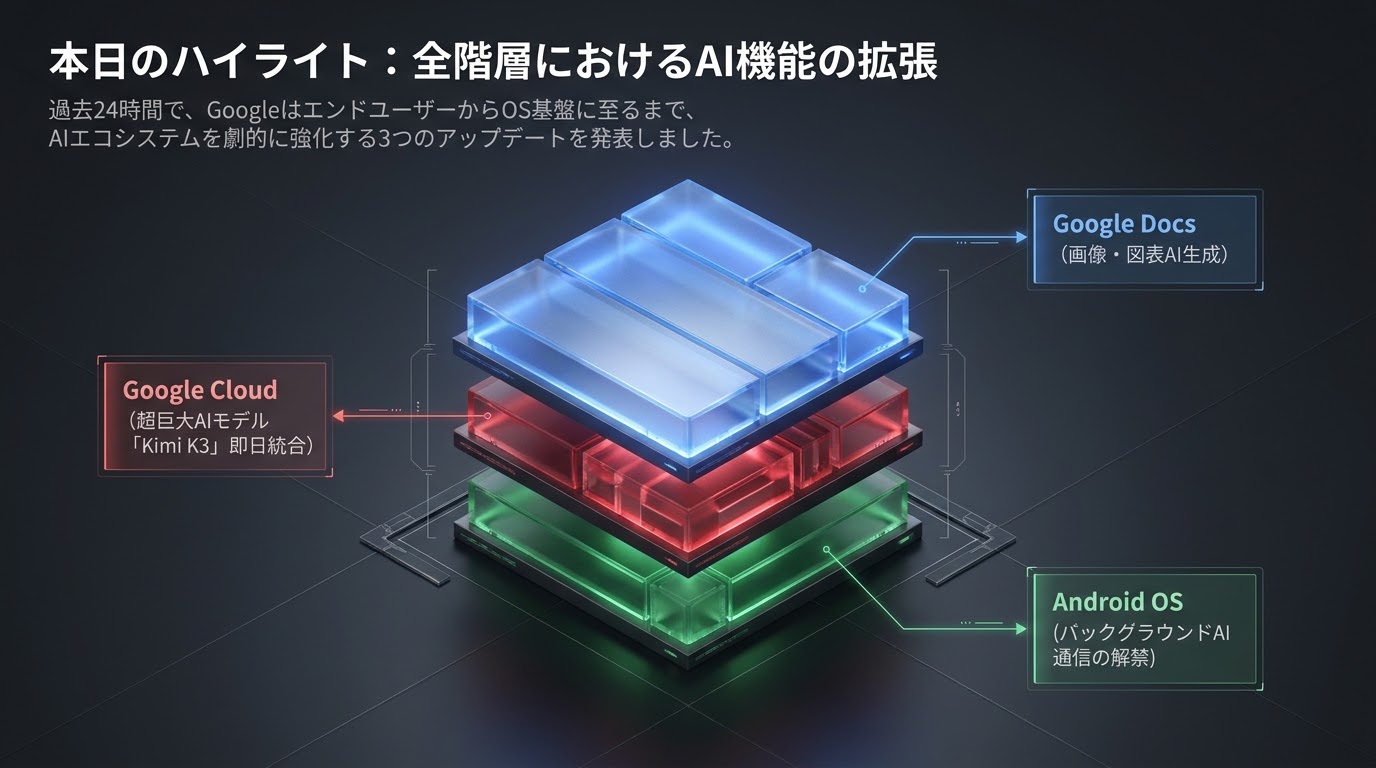
Today, let's decode three important topics directly linked to our daily lives that Google announced in the last 24 hours. These may seem like disjointed moves at first glance, but they are actually meticulously calculated steps to transform AI from a "specialized tool" into something as ubiquitous as the air we breathe.
1. Separate Tools No Longer Needed. Generate Charts Instantly Within Documents
Document creation in Google Docs has reached a dramatic turning point. With the latest Google Workspace update, a new feature has been rolled out that allows you to directly generate and edit images, diagrams, and infographics within the document using Gemini, relying solely on text instructions (prompts).
The biggest point of this update is that it "does not require external tools." Previously, creating stunning visual aids required launching separate graphic software or searching stock image sites. However, moving forward, you can generate visual materials that perfectly match the context of your document in real-time, right on the spot. This "seamlessness" that doesn't interrupt your flow of thought will elevate the efficiency of document creation to the next dimension.
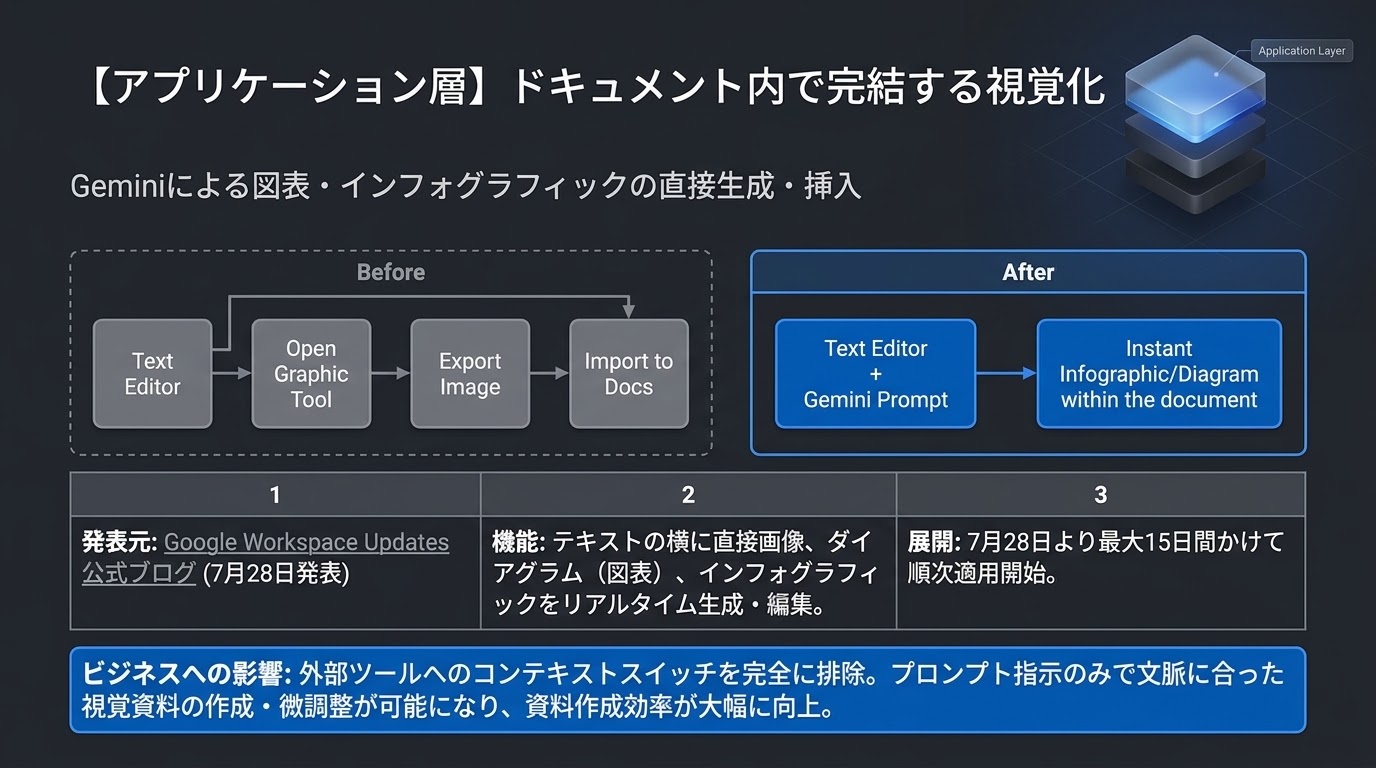
According to the Google Workspace Updates Blog, this feature has begun a gradual rollout starting July 28, 2026, and is expected to be available to all users over a maximum of 15 days. An environment where ideas can be instantly visualized will overwhelmingly accelerate the speed of our creative activities.
2. The Impact of 2.8 Trillion Parameters. Immediate Support for the Giant Model "Kimi K3"
The next point of attention is the overwhelming infrastructural flexibility and speed demonstrated by Google Cloud. In response to the newly announced MoE (Mixture of Experts) type latest model "Kimi K3" boasting 2.8 trillion parameters by Moonshot AI, Google Cloud announced "Day 0 support," enabling its deployment on the very day of its release.
Despite possessing its own powerful AI, "Gemini," Google is enabling the latest models from other companies to run instantly on infrastructure environments like GKE (Google Kubernetes Engine). This strategy clearly reveals Google's stance as not just an AI developer, but one seeking hegemony over a "multi-model ecosystem" where diverse AI worldwide can thrive.
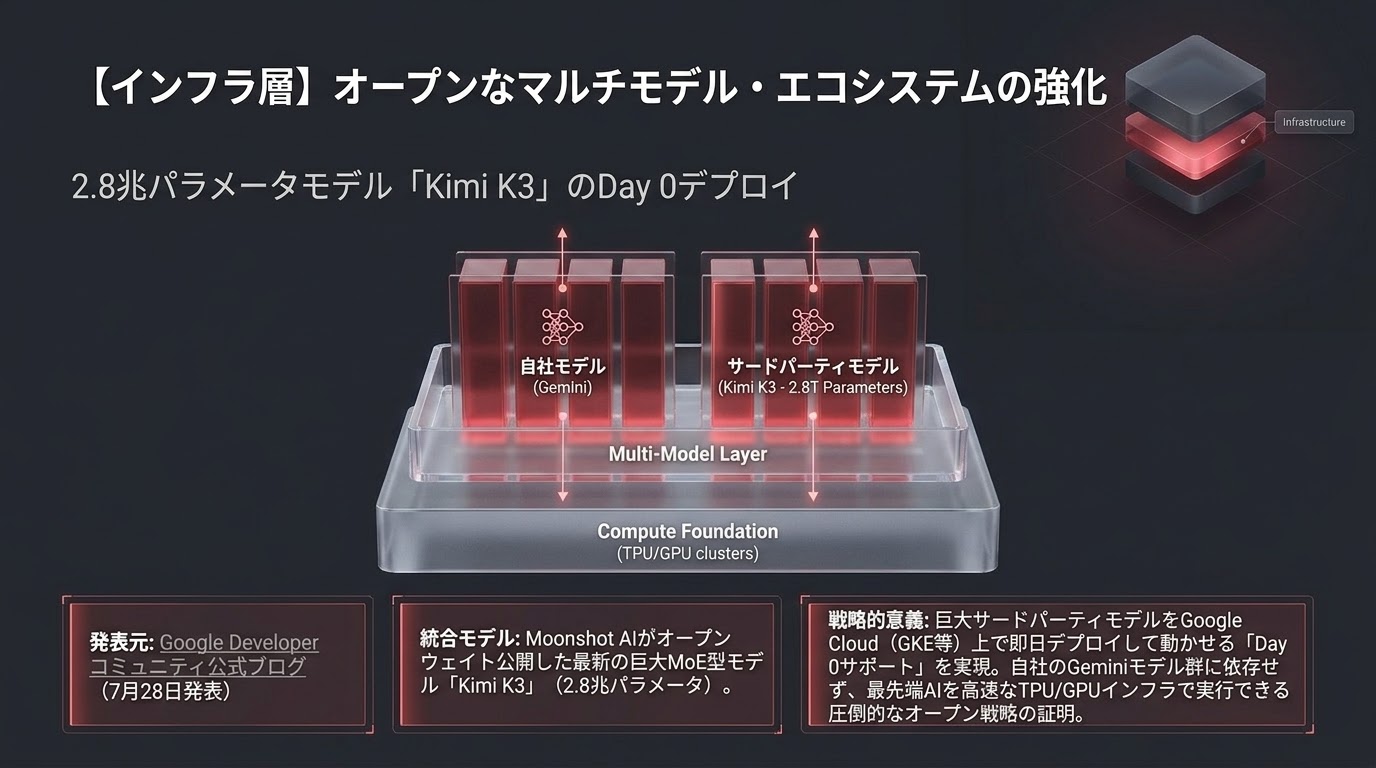
Google is perfecting the cloud—a giant "brain"—as a robust vessel capable of running intelligences from both itself and other companies at high speeds. And now, that intelligence is transcending the walls of the cloud and attempting to connect to the devices in our hands.
3. Behind the Policy Revision: A Future Where AI Agents Work Even in Idle State
We cannot overlook important changes regarding the devices in our pockets. The Google Play Terms of Service were revised (dated July 29, 2026) to clarify that system services on certified Android devices can conduct network communications in the background, even when the device is in an "idle state" and not actively being operated by the user.
This is not merely an organization of legal wording; it is a de facto declaration of war for AI to evolve from a "tool waiting for the owner's instructions" into an "autonomously acting partner." This is a highly strategic move, especially when anticipating the existence of something like "Gemini Spark," which will become the core of personal AI in the future.
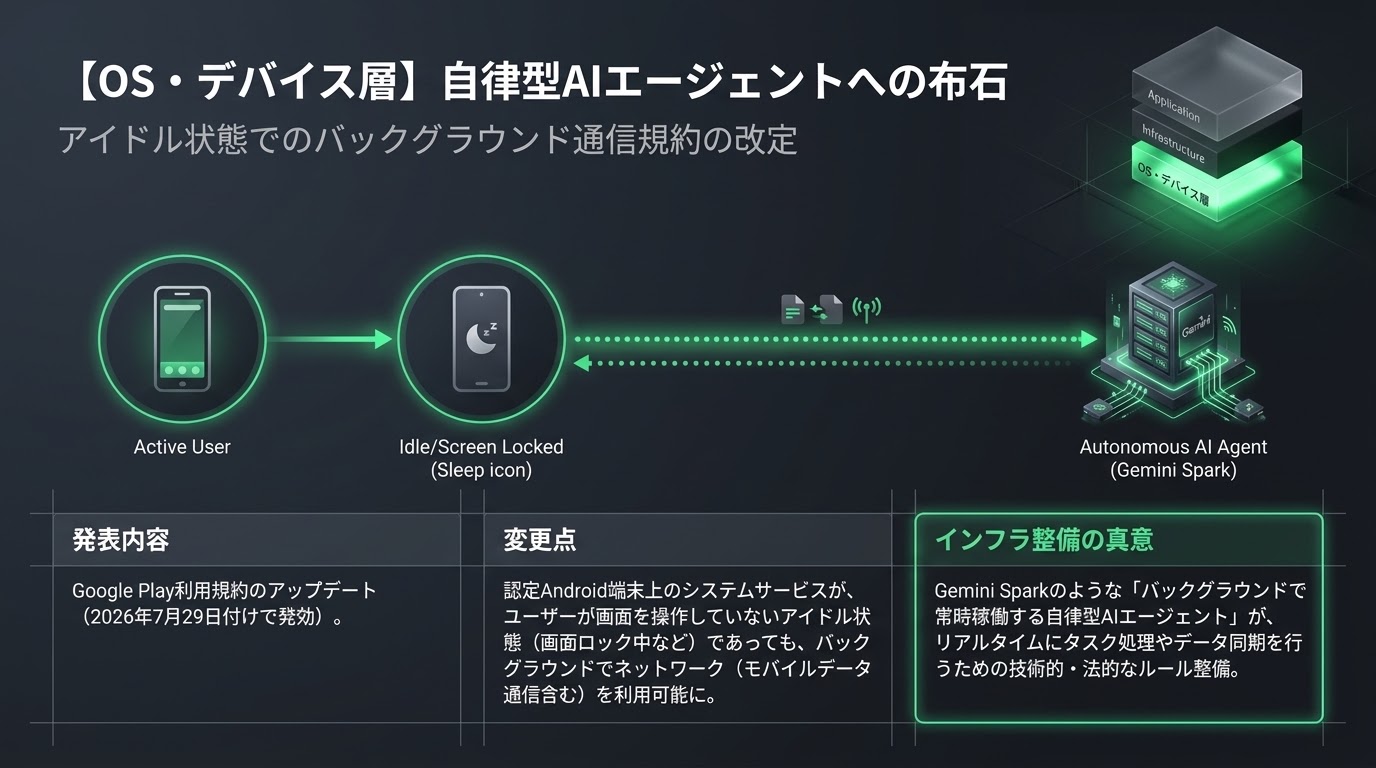
Thanks to this policy change, even while you are asleep or have set your smartphone aside while working, an AI Agent will be able to continue data synchronization and necessary task processing in the background. The smartphone is evolving from "something you operate" into "something that anticipates and works for you" without the owner even being conscious of it.
Conclusion: AI from "Tool" to "The OS Itself"
Connecting the three topics introduced today reveals a future where AI has graduated from being a mere "convenient feature" and is melting into an "OS itself" that covers the entirety of our digital lives.
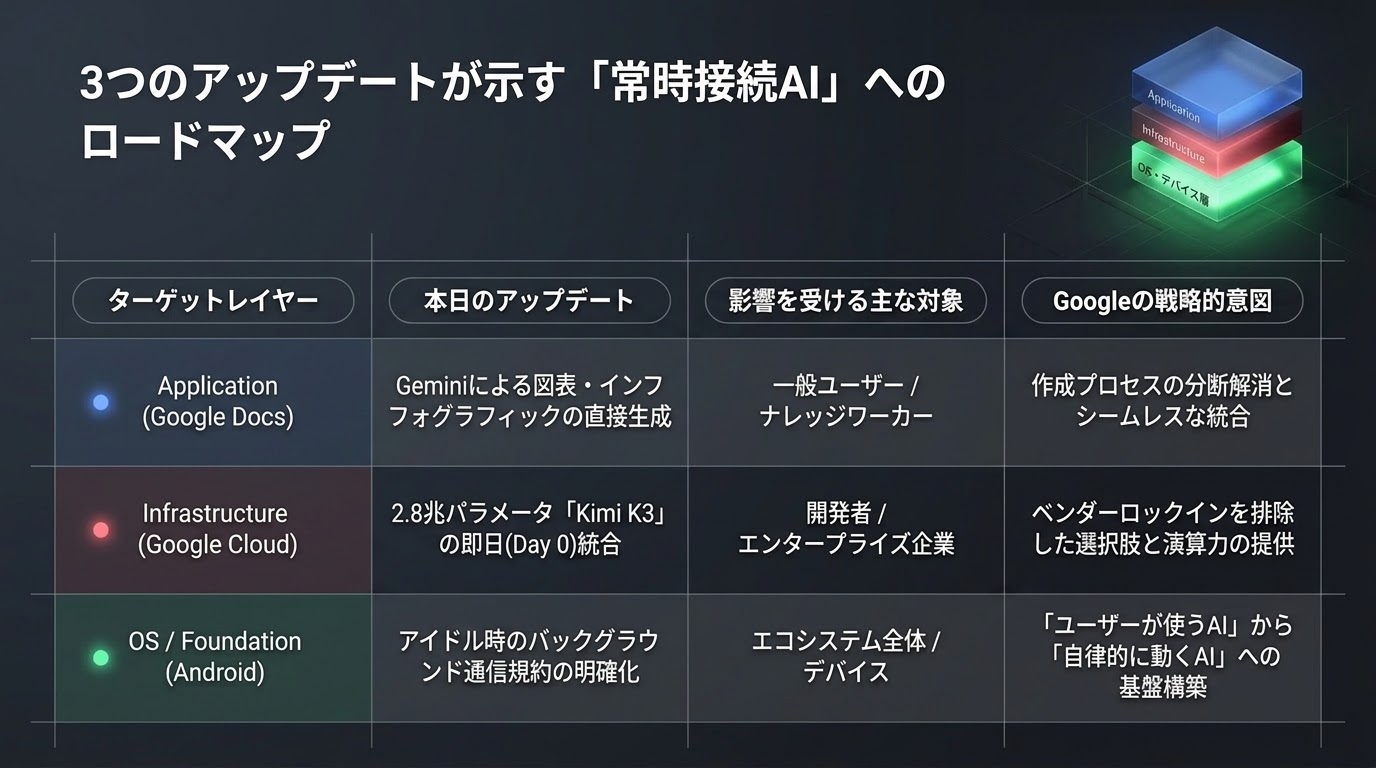
- 【Creation】
The power to instantly shape thoughts in document creation.
- 【Computation】
The power to freely manipulate giant intelligence through cloud infrastructure.
- 【Continuity】
The power to continuously support users 24/7 through the establishment of OS policies.
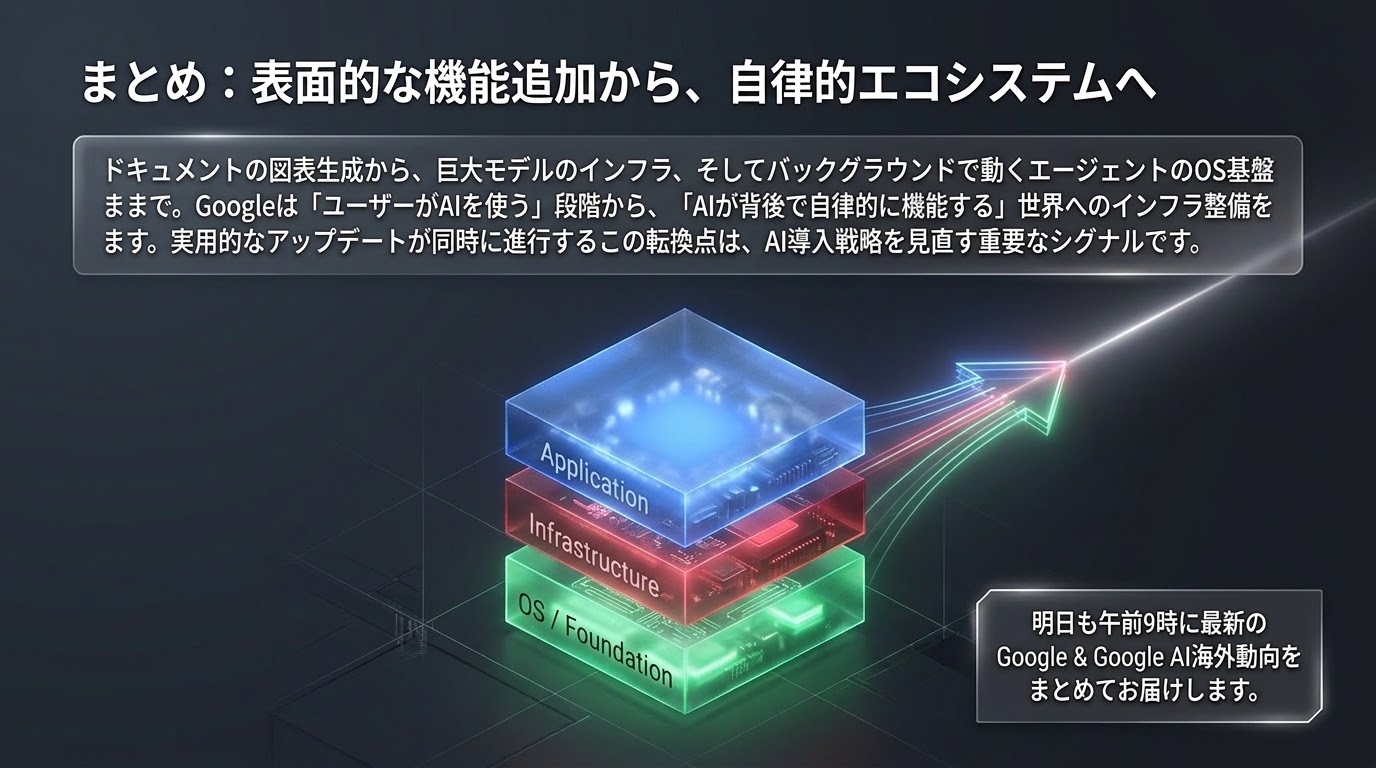
These three updates suggest that AI is no longer something we call upon to use, but will become our living infrastructure itself.
Your smartphone perfectly preparing for tomorrow while you sleep. In such a future, what will you choose to entrust to it?